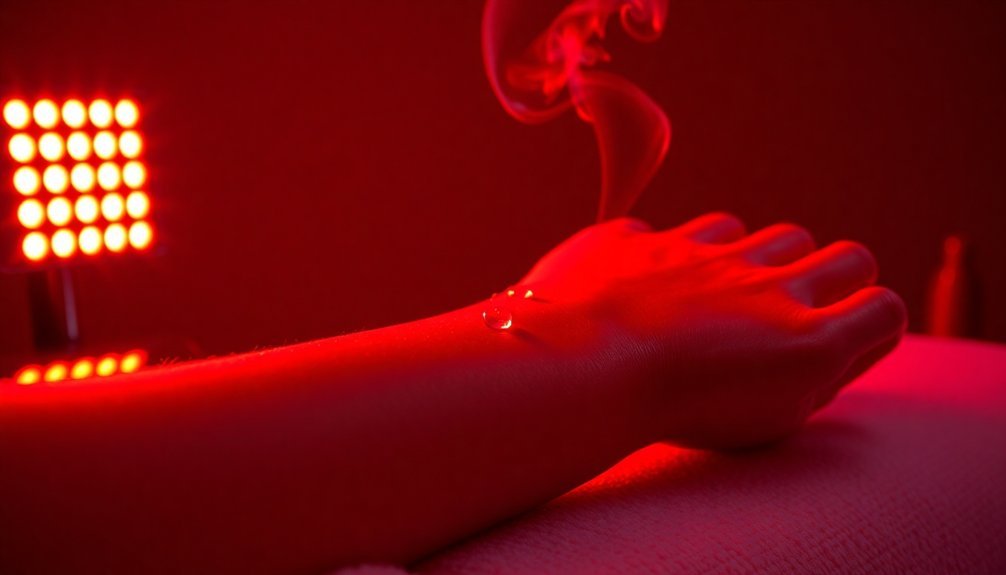
Three effective light therapies can substantially boost your blood flow and cardiovascular health. Red light therapy enhances heart function and increases nitric oxide production, helping your blood vessels dilate naturally. Near-infrared therapy penetrates deeper into tissues, stimulating cellular energy production and improving circulation in muscles and joints. When combined, these therapies create a powerful protocol that targets both surface-level and deep tissue blood flow, making it particularly effective for poor circulation in legs, feet, and hands. Understanding how to properly implement these treatments will help you maximize their circulation-boosting benefits.
Red Light Cardiovascular Treatment
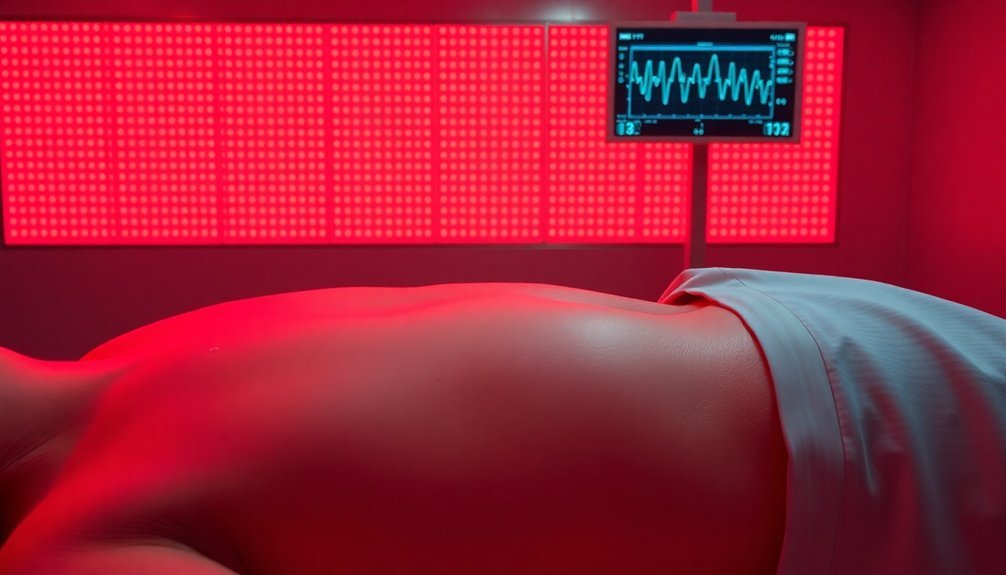
While many people associate light therapy with skin treatments, red light therapy (RLT) has emerged as a promising treatment for cardiovascular health. Research shows that RLT can improve heart function, particularly in cases of heart failure, by enhancing mitochondrial function and reducing heart size. This therapy's impact on cardiac health is especially notable for those with diabetes or other conditions that increase heart disease risk. The therapy has demonstrated effectiveness in reducing PAD symptoms, helping patients achieve longer pain-free walking distances.
RLT's benefits extend beyond basic heart function. It's proven to reduce inflammation in heart tissue, which is essential since chronic inflammation is a major risk factor for heart disease. The therapy works by stimulating nitric oxide production, which helps your blood vessels relax and dilate, improving overall circulation.
If you're considering RLT for cardiovascular health, you can access treatments at professional clinics or use at-home devices. The typical protocol involves 10 to 20-minute sessions, three to five times weekly. For best results, you'll want to combine RLT with regular exercise and a healthy diet.
While studies in mice have shown promising results, ongoing human research will help determine the full scope of RLT's cardiovascular benefits.
Near-Infrared Deep Tissue Therapy
Although red light therapy offers significant cardiovascular benefits, near-infrared (NIR) light therapy penetrates even deeper into body tissues for enhanced healing effects.
When you undergo NIR therapy, the 850nm wavelength light activates your body's natural healing mechanisms, improving blood flow by dilating vessels and increasing nitric oxide production. The therapy is especially effective since it operates at lower temperatures than traditional saunas, making it more comfortable during treatment sessions.
You'll experience multiple healing benefits as NIR light stimulates your cells' mitochondria to produce more ATP, providing the energy needed for tissue repair and regeneration. This therapy's powerful anti-inflammatory properties help reduce pain and accelerate recovery, whether you're dealing with muscle soreness, joint issues, or wound healing.
Here's what makes NIR therapy particularly effective for deep tissue treatment:
- It penetrates deeper than red light, reaching muscles, bones, and joints to promote healing from within
- It enhances cellular communication and antioxidant defenses, protecting your tissues from oxidative stress
- It improves collagen production while reducing inflammation, supporting both structural healing and pain relief
For the best results, you'll find NIR therapy especially beneficial when combined with regular exercise, as it helps reduce muscle fatigue and accelerates post-workout recovery.
Combined Light Circulation Protocol
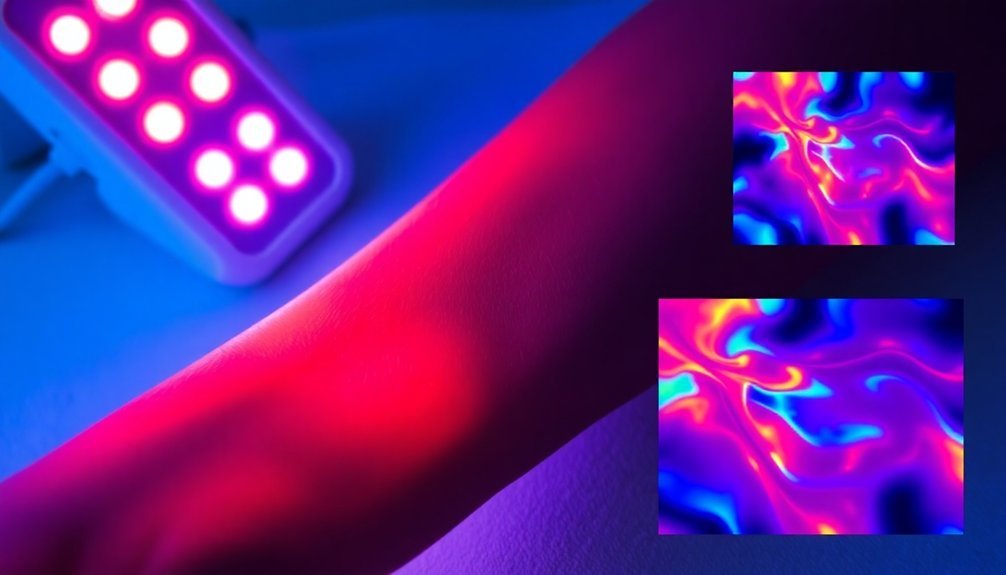
Today's most effective light therapy protocols combine both red and near-infrared wavelengths to maximize circulation benefits throughout your body's tissues. This dual-spectrum approach lets you target both superficial and deep tissue circulation simultaneously, with red light stimulating surface blood flow while near-infrared penetrates deeper into muscles and joints.
You'll want to use devices with power densities between 500-1000 mW/cm² for best results, focusing on areas with poor circulation like your legs, feet, and hands. Regular treatments at this intensity provide excellent tissue penetration for optimal therapeutic benefits. Schedule your sessions 3-5 times weekly, starting with 10-minute treatments and gradually increasing to 20 minutes as your body adapts.
The protocol works by triggering increased nitric oxide production, which dilates your blood vessels and enhances oxygen delivery to cells.
You'll get the best results by combining these treatments with regular exercise and healthy eating. If you're dealing with specific conditions like PAD, diabetic neuropathy, or CVI, you might benefit from professional treatments that offer more powerful penetration. For general circulation improvement and muscle recovery, home devices can effectively boost your microcirculation and support cellular repair through enhanced mitochondrial function.
Frequently Asked Questions
Can Light Therapy Interact Negatively With Blood-Thinning Medications?
You'll need to be cautious since light therapy can affect blood clotting and flow. While there's no direct evidence of negative interactions, it's essential you inform your doctor if you're using both treatments.
How Soon After Surgery Is It Safe to Start Light Therapy?
You'll need to wait until your incisions heal and swelling subsides, typically 2-4 weeks post-surgery. Always get your doctor's clearance first, as timing varies based on your specific procedure and recovery progress.
Does Skin Color or Thickness Affect the Effectiveness of Light Therapy?
Your skin color and thickness won't substantially impact light therapy's effectiveness. Recent studies show it works equally well for all skin types, though different wavelengths penetrate to varying depths in your tissue.
Should I Avoid Light Therapy During Menstruation or Pregnancy?
You don't need to avoid light therapy during menstruation – it's actually beneficial for reducing cramps. However, while generally safe during pregnancy, you should consult your healthcare provider first for personalized guidance.
Can Light Therapy Help With Altitude Sickness Circulation Problems?
While red light therapy can improve general circulation, it won't directly treat altitude sickness. You'll need traditional methods like descent and supplemental oxygen for severe symptoms. Acclimatization and gradual ascent remain your best preventive measures.
In Summary
You'll find these three light therapy approaches offer powerful ways to enhance your circulation naturally. Whether you choose red light for surface blood flow, near-infrared for deeper tissue penetration, or a combined protocol for maximum benefits, you're taking an important step toward better cardiovascular health. Start with short sessions and gradually increase exposure time as you monitor your body's response to these effective treatments.