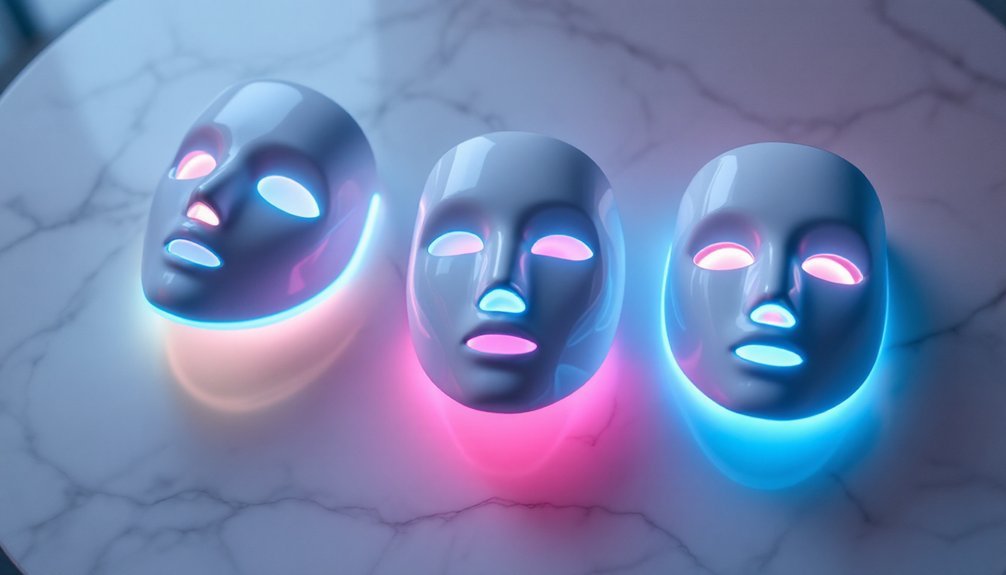
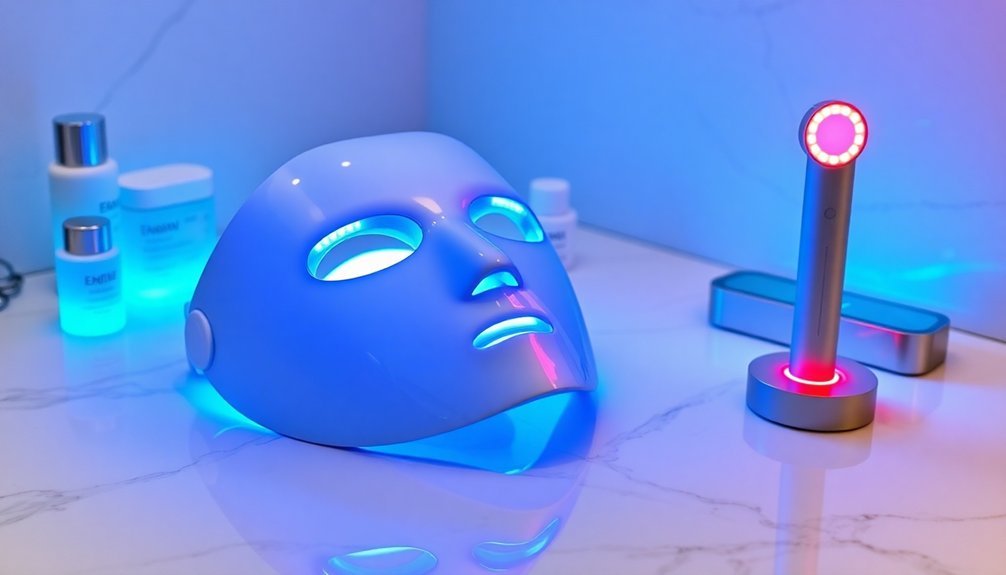
Looking for effective teen acne solutions? You'll find reliable treatment with today's top light therapy devices. The Neutrogena Light Therapy Mask offers budget-friendly full-face coverage, while the professional-grade LightStim for Acne delivers powerful long-term results. For on-the-go treatment, try the portable Foreo ESPADA with its smart sensor technology. These devices harness blue light (405-420 nanometers) to eliminate acne-causing bacteria and can achieve up to 70% improvement in just 8-10 weeks. With proper use and consistency, you'll see significant results – and there's even more to discover about maximizing your acne-fighting potential.
Understanding Teen Light Therapy Basics
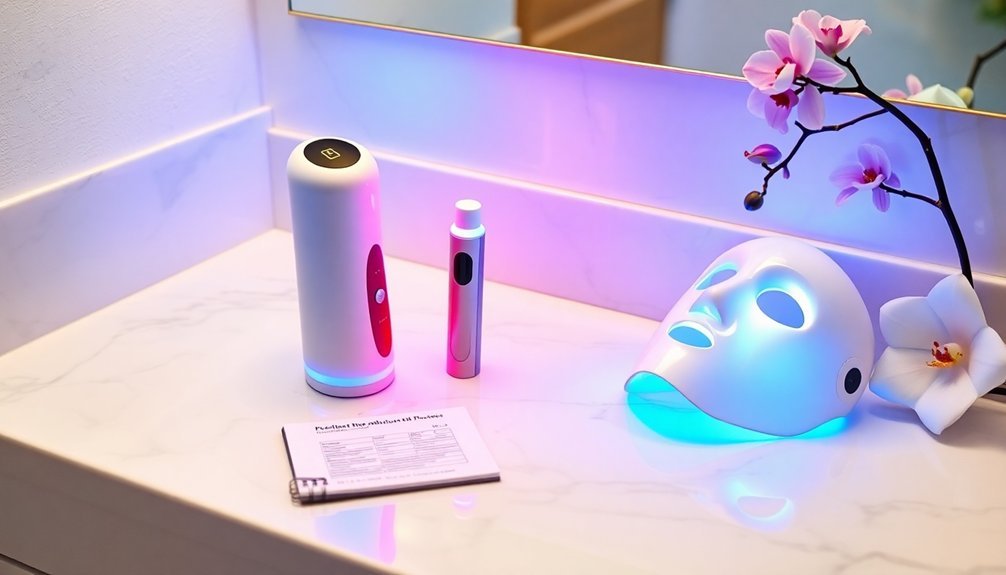
A beam of healing light might be exactly what your teen needs to combat persistent acne. Light therapy has emerged as a safe, non-invasive treatment that effectively targets multiple aspects of acne formation without causing long-term complications.
You'll find two primary types of light therapy that work in different ways. Blue light specifically targets and kills P. acnes bacteria while reducing oil production in the pores. Red light focuses on calming inflammation and promoting healing, making it ideal for reducing redness and swelling. Studies show that up to 70% clearance can be achieved after 8-10 sessions. Many treatments combine both types for maximum effectiveness.
What makes light therapy particularly appealing for teens is its gentle approach. Unlike harsh topical treatments or oral medications, it won't cause severe side effects. You'll typically notice only mild redness or swelling after treatment, which quickly subsides. The therapy can also be used alongside other acne treatments without adverse reactions.
Before starting treatment, you'll need to take into account a few key factors. If your teen has light sensitivity or certain medical conditions, they'll need to avoid light therapy.
It's also important to stay out of the sun before and after treatments, especially when using photodynamic therapy with medications like ALA or MAL.
Top Light Devices Today
Three standout devices lead today's light therapy market for teen acne treatment. The Neutrogena Light Therapy Acne Mask offers an affordable entry point, combining blue and red light therapy in an easy-to-use design that's perfect for teens starting their acne treatment journey. The LightStim for Acne provides professional-grade treatment with multiple wavelengths and zero maintenance costs, making it a reliable long-term investment. For spot treatments, the Foreo ESPADA's portable design and smart skin sensor make it ideal for teens on the go. These devices use wavelengths of 405 to 420 nanometers to effectively eliminate acne-causing bacteria.
| Device | Key Benefits | Best For |
|---|---|---|
| Neutrogena Mask | Budget-friendly, easy setup | Daily full-face treatment |
| LightStim | Professional-grade, maintenance-free | Long-term acne management |
| Foreo ESPADA | Portable, smart sensor technology | Spot treatments |
When choosing a device, you'll want to take into account your treatment needs and lifestyle. The Neutrogena mask works well for mild to moderate acne with consistent use. The LightStim offers more intensive treatment for stubborn acne, while the ESPADA's portability makes it perfect for treating unexpected breakouts. Each device features both blue light to kill bacteria and red light to reduce inflammation, ensuring thorough acne care.
Scientific Results Behind Light Treatment
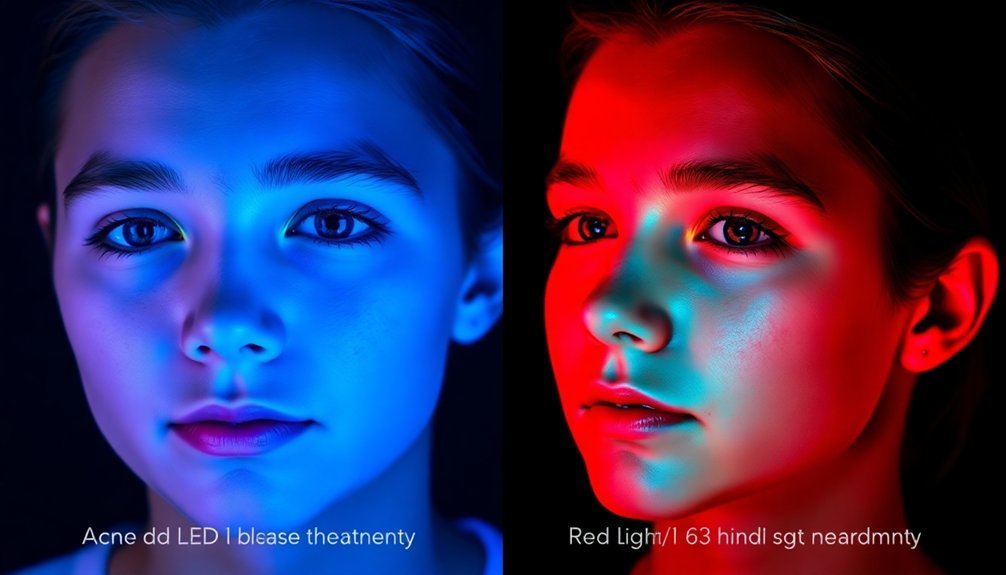
Multiple clinical studies have demonstrated the effectiveness of light therapy for acne treatment, with success rates ranging from 65% to 90% improvement in participants.
You'll find that blue light therapy alone can reduce acne lesions by up to 65% within just 4 weeks, while combining blue and red light therapy offers even better results, showing up to 77% improvement in inflammatory lesions.
The science behind these results is clear. Blue light works by killing acne-causing bacteria and reducing inflammation in your skin cells, while red light penetrates deeper to reduce inflammation and speed up healing. Treatments must be administered on clean, makeup-free skin for optimal effectiveness.
When you combine both wavelengths, you're getting a powerful dual action that tackles acne at different skin depths.
While research shows promising results, it's worth noting that some studies have limitations. The effectiveness of photodynamic therapy (PDT) with special light-activating creams isn't considerably better than using light therapy alone.
You should also know that most studies have been conducted with small groups, and researchers are still investigating the ideal settings and treatment protocols for different types of acne.
Safety And Best Practices
Light therapy's safety profile makes it an attractive option for treating teen acne, but you'll need to follow specific precautions to avoid potential side effects. While redness, bruising, and mild pain are common reactions, more severe complications like infection or dark pigmentation can occur if you don't follow proper protocols. Treatment by a licensed dermatologist significantly reduces the risk of adverse effects.
Before starting treatment, you'll want to confirm you're a suitable candidate. Don't use light therapy if you're pregnant, taking antibiotics, or have heightened sensitivity to sunlight. Test the device on a small skin patch first to check for adverse reactions.
To enhance safety and effectiveness, follow your dermatologist's instructions precisely. You'll need to stay out of direct sunlight for 48 hours after photodynamic therapy and maintain gentle skincare practices throughout your treatment course. Regular sessions are essential for the best results.
After each treatment, focus on proper aftercare. Use moisturizer to combat dryness, avoid harsh skincare products, and monitor your skin for any concerning changes. If you notice dried pus, blistering, or severe pain, contact your healthcare provider immediately.
Consistent follow-up appointments will help guarantee your treatment stays on track and remains safe.
Using Light Therapy Effectively
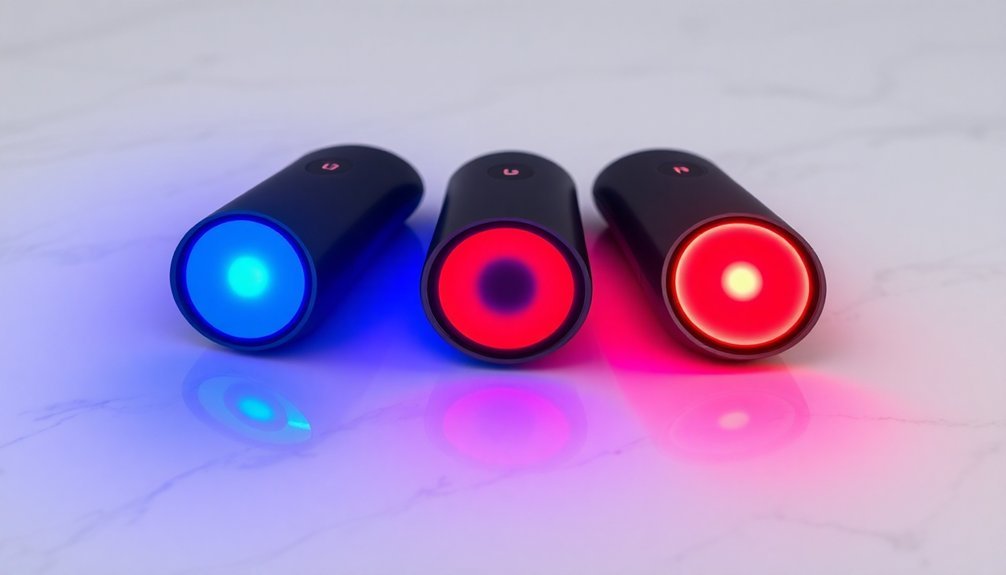
Successful acne treatment with light therapy depends on choosing the right device and following a consistent routine. You'll need to determine whether blue, red, or combination therapy best suits your acne type. Blue light targets bacteria, while red light reduces inflammation and promotes healing.
To maximize your treatment's effectiveness, you'll want to maintain regular weekly sessions, typically lasting 15-30 minutes. If you're using a home device, choose a consistent time of day for your treatments. Before each session, confirm your face is clean and free from makeup or sunscreen. The number of treatment sessions can vary widely, with some studies showing effectiveness ranging from one to 112 sessions.
You'll also need to avoid sun exposure and tanning beds during your treatment period. For best results, you can expect to complete 8-10 treatment sessions, with many users seeing up to 70% improvement in their acne.
If you're using a combination device, start with the blue light treatment followed by red light therapy. Remember to adjust the intensity settings based on your skin's sensitivity and your acne's severity. If you're using photosensitizing medications like ALA or MAL, follow your dermatologist's specific instructions, as these can make your skin more reactive to light therapy.
Frequently Asked Questions
Can Light Therapy Devices Be Shared Among Family Members With Acne?
While you can share light therapy devices, it's not recommended due to infection risks and cross-contamination concerns. You'll get better results and maintain proper hygiene by having your own personal device for acne treatment.
Will Light Therapy Still Work if I Have Darker Skin?
Yes, light therapy can work effectively on darker skin. You'll find both blue and red light treatments are safe options, though you should be cautious with photodynamic therapy. Always consult a dermatologist for personalized guidance.
Does Wearing Makeup Affect the Effectiveness of Light Therapy Treatments?
Yes, your makeup can interfere with light therapy's effectiveness by blocking light penetration into your skin. You'll get better results if you remove all makeup before treatments. It's recommended to start with clean, bare skin.
Can I Use Light Therapy While Taking Prescription Acne Medications?
You can safely use light therapy with most prescription acne medications, but you'll need to check with your doctor first. Be especially careful with medications like isotretinoin, as they may require special monitoring.
How Long Should I Wait Between Using Different Acne Treatments?
You should wait at least 6 weeks before switching between treatments to properly evaluate effectiveness. If you're combining treatments, space them throughout the day and consult your doctor to avoid potential interactions.
In Summary
Light therapy devices can be powerful tools in your teen's acne-fighting arsenal. You'll find these devices are safe, effective, and convenient when used properly. Remember to stick to the recommended treatment schedule and combine light therapy with a good skincare routine. While results won't happen overnight, you're making a smart investment in your teen's skin health and confidence with these FDA-approved light devices.