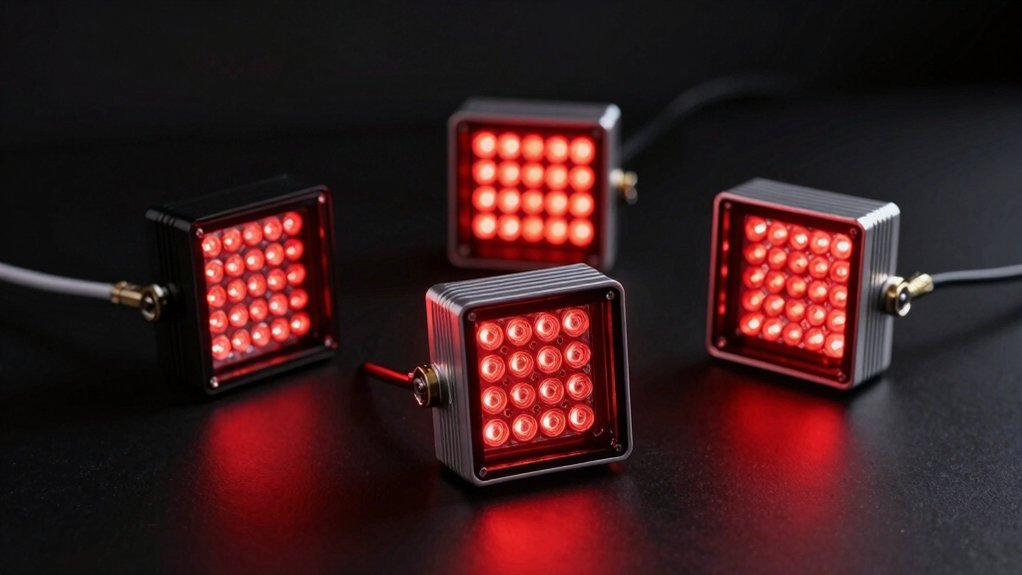
You’re investing in biohacking technology that demands precision and reliability. Standard red light panels won’t cut it when you’re targeting deep-tissue recovery and cellular optimization. The four near-infrared LED arrays we’re examining deliver wavelengths between 850–880 nm with thermal management systems that keep output stable. But which model aligns with your specific goals? The answer depends on factors you might not’ve considered yet.
| LED Red Light Therapy Panel 660nm and 850nm | 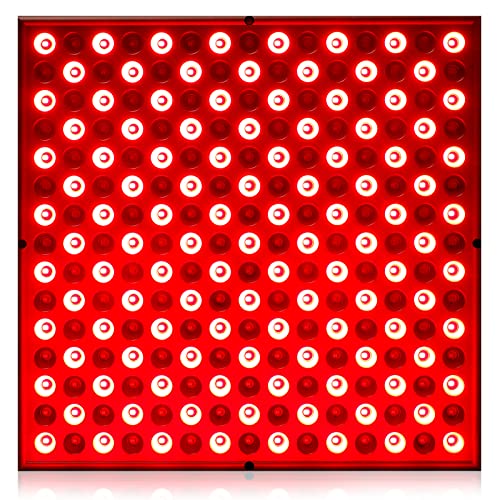 | Best for Everyday Use | Primary Wavelengths: 660nm (deep red), 850nm (near-infrared) | Power Output: 45W | Setup Configuration: Hung or placed independently | CHECK ON AMAZON | Read Our Analysis |
| Red-Light Therapy LED Panel for Skin and Pain Relief |  | Most Comprehensive Benefits | Primary Wavelengths: 660nm (deep red), 850nm (near-infrared) | Power Output: 45W | Setup Configuration: Hung or placed independently | CHECK ON AMAZON | Read Our Analysis |
| 45W Red LED Light Therapy Panel (660nm/850nm) |  | Best Value Pick | Primary Wavelengths: 660nm (deep red), 850nm (near-infrared) | Power Output: 45W | Setup Configuration: Hung or placed independently | CHECK ON AMAZON | Read Our Analysis |
| Near Infrared & Red Light Therapy Panel with Remote | 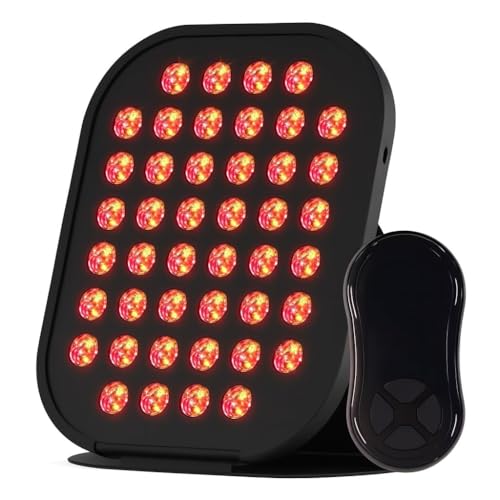 | Most Advanced Features | Primary Wavelengths: 660nm (red), 605nm (amber), 590nm (yellow), 460nm (blue), 850nm (near-infrared) | Power Output: Not specified | Setup Configuration: Foldable design with wireless remote | CHECK ON AMAZON | Read Our Analysis |
More Details on Our Top Picks
LED Red Light Therapy Panel 660nm and 850nm
If you’re constantly juggling work stress, muscle soreness, or skin concerns, you’ll find the 660nm and 850nm LED Red Light Therapy Panel particularly valuable. This 45W device combines deep red and near-infrared wavelengths to stimulate cell repair and accelerate cellular metabolism. The 660nm wavelength targets skin rejuvenation, diminishing freckles and reducing visible redness, while the 850nm penetration enhances blood circulation in capillaries. You can hang or place the panel independently, allowing you to read, work, or relax simultaneously. It’s a safer alternative to traditional painkillers and expensive therapies, making it ideal for fitness enthusiasts, office workers, and anyone seeking effective biohacking solutions.
- Primary Wavelengths:660nm (deep red), 850nm (near-infrared)
- Power Output:45W
- Setup Configuration:Hung or placed independently
- Intended Use Cases:Skin rejuvenation, pain relief, daily home use
- Safety & Reliability:Safer than traditional painkillers and OTC products
- Warranty/Guarantee:Not specified
- Additional Feature:Versatile positioning options
- Additional Feature:Multi-activity compatible usage
- Additional Feature:Broad demographic suitability
Red-Light Therapy LED Panel for Skin and Pain Relief
Are you searching for a versatile red-light therapy solution that tackles both aesthetic and therapeutic concerns without pharmaceutical intervention? This 45W LED panel combines 660nm and 850nm wavelengths for ideal results. You’ll stimulate collagen production, reduce wrinkles, and improve skin elasticity while relieving muscle and joint pain naturally. The advanced LED technology ensures reliable performance with minimal heat generation. You can hang it anywhere or position it independently, allowing you to read, watch TV, or work during treatment sessions. Its flexible setup makes it practical for your entire family, and the 4-month replacement guarantee provides peace of mind for your investment.
- Primary Wavelengths:660nm (deep red), 850nm (near-infrared)
- Power Output:45W
- Setup Configuration:Hung or placed independently
- Intended Use Cases:Skin beauty, muscle/joint pain relief, home applications
- Safety & Reliability:Safe with no significant adverse effects; advanced LED reliability
- Warranty/Guarantee:4-month replacement policy
- Additional Feature:Four-month replacement policy
- Additional Feature:Collagen and elastin promotion
- Additional Feature:Comprehensive aging reduction benefits
45W Red LED Light Therapy Panel (660nm/850nm)
Looking to optimize your recovery routine without leaving home? The 45W Red LED Light Therapy Panel combines 660nm deep red and 850nm near infrared wavelengths in an FDA-registered device designed for biohackers serious about performance. You’ll appreciate its versatility—hang it on your wall or position it independently while reading, working, or relaxing. The robust LED technology delivers consistent, reliable light therapy without thermal issues. Setup’s straightforward: plug in the 1.5m power cord and you’re ready. Lightweight and intuitive, it’s backed by a 100% satisfaction guarantee, making your investment risk-free.
- Primary Wavelengths:660nm (deep red), 850nm (near-infrared)
- Power Output:45W
- Setup Configuration:Hung or placed independently
- Intended Use Cases:Skin therapy, pain relief, daily home therapy
- Safety & Reliability:FDA registered; safe, no side effects, no infection risk
- Warranty/Guarantee:100% satisfaction guarantee with money-back or replacement
- Additional Feature:FDA registered device
- Additional Feature:Money-back satisfaction guarantee
- Additional Feature:Ready-to-use out-of-box
Near Infrared & Red Light Therapy Panel with Remote
Want a versatile red light therapy solution that doesn’t require you to choose between portability and functionality? The InfraVita Near Infrared & Red Light Therapy Panel delivers both. Its 220 LEDs span five wavelengths—red, amber, yellow, blue, and near-infrared—letting you customize your routine through seven preset programs. Whether you’re targeting calm, hydration, or radiance, you’ll find a tailored option. The foldable design travels easily, while the wireless remote gives you convenient brightness and timer control. Protective goggles and USB-C cables are included. Perfect for facial and body applications, this panel integrates seamlessly into your daily wellness ritual.
- Primary Wavelengths:660nm (red), 605nm (amber), 590nm (yellow), 460nm (blue), 850nm (near-infrared)
- Power Output:Not specified
- Setup Configuration:Foldable design with wireless remote
- Intended Use Cases:Facial, neck, back, knees; everyday self-care routine
- Safety & Reliability:Low-EMF; flicker-free engineering; cosmetic/wellness use only
- Warranty/Guarantee:Not specified
- Additional Feature:Seven preset treatment programs
- Additional Feature:Wireless remote control
- Additional Feature:Foldable portable design
Factors to Consider When Choosing a Near Infrared LED Array Panel for Serious Biohackers
When you’re selecting a near infrared LED array panel, you’ll want to evaluate the wavelength spectrum coverage to guarantee it delivers the therapeutic ranges your biohacking protocol demands. You should also assess the power output and efficiency ratings, build quality standards, and portability features that fit your training environment and lifestyle. Finally, you’ll benefit from reviewing the advanced control features available, as customizable settings let you optimize your sessions for specific biohacking goals.
Wavelength Spectrum Coverage
Why does wavelength matter so much in near-infrared panels? You’re essentially selecting your tissue penetration depth. A robust panel combines 660–670 nm red light with 850–880 nm near-infrared wavelengths, targeting both surface and deeper layers simultaneously. This dual-band approach optimizes collagen production, circulation, and cellular metabolism more effectively than single-wavelength devices.
Some advanced panels add supplementary wavelengths like 590–605 nm or 460 nm for enhanced synergy, though your primary deep-tissue benefits come from 850+ nm alone. Before purchasing, verify exact wavelength ranges and spectral output specifications. This clarity helps you predict which tissue depths you’ll actually reach and compare penetration capabilities across competing devices accurately.
Power Output And Efficiency
Once you’ve locked in your wavelength spectrum, you’ll need to assess how much raw power your panel actually delivers—because knowing the right frequencies means little if the device can’t push that light deep enough into your tissues. You’ll want higher wattage for superior penetration with 850 nm wavelengths, but wattage alone doesn’t tell the whole story. Panel efficiency matters tremendously; quality LEDs paired with robust thermal management determine the actual irradiance reaching your skin and whether performance stays consistent throughout extended sessions. Uniform irradiance distribution prevents hot spots and ensures reliable results. Look for low thermal resistance designs that maintain stable output without intensity drop-off. A well-engineered higher-wattage panel with effective heat dissipation lets you achieve results faster—ideal if you’re serious about maximizing your biohacking efficiency.
Build Quality And Durability
A near infrared panel’s longevity hinges on its construction fundamentals—specifically, the substrate material, component soldering, and thermal architecture that keep it running reliably through months of daily use. You’ll want robust aluminum or high-grade PCB substrates with soldered connections that resist flex and microcracking during repeated power cycles.
Look for panels rated for 8–10 hours daily duty with cool-running designs and low thermal resistance. This prevents diode degradation and extends component lifespan. Inspect connectors, cable strain relief, and mounting points—these details determine whether your panel survives daily handling without failure.
Verify certified components with documented MTBF specifications and proven thermal management performance. These indicators separate durable panels from those prone to premature failure.
Portability And Setup Flexibility
How much does your biohacking setup’s location matter? Plenty. You’ll want a panel that moves with you—between your desk, bedroom, and gym without hassle.
Lightweight, foldable designs let you relocate rapidly between workspaces and testing environments. Independent panel configurations support wall mounting or standalone placement, giving you flexible exposure angles for targeted tissue areas.
Wireless remotes and detachable power inputs eliminate cable clutter, streamlining your mobile sessions. USB-C or standard power cords with 1–2 meter lengths adapt to desks, beds, or gym setups effortlessly.
Look for low-EMF, flicker-free engineering too. Extended trials demand comfort, and you’ll avoid potential interference with sensitive biohacking equipment. Portability isn’t just convenient—it’s essential for serious practitioners who optimize across multiple environments.
Advanced Control Features Available
Why settle for one-size-fits-all light therapy when you’re optimizing your biohacking protocol? You’ll want panels featuring adjustable irradiance and duty cycle control, enabling you to tailor dosing precisely for deep tissue targeting with 850 nm wavelengths. Software-based or remote control systems let you program treatment sessions with repeatable timings and scheduling automation—critical for maintaining consistency across experiments.
Look for devices providing real-time output meters and traceable specifications, ensuring your data remains reproducible. Advanced panels offer wavelength stability at both 660 nm and 850 nm with minimal thermal drift, protecting your results from environmental interference. Additionally, prioritize low EMF emissions and flicker-free operation to eliminate variables that could compromise sensitive biometric monitoring or sleep optimization work.
Safety And EMF Considerations
You can’t overlook the electromagnetic field (EMF) exposure risks when selecting a near-infrared LED panel for intensive biohacking protocols. Look for devices designed with low-EMF operation and FCC/IEC compliance to minimize potential non-thermal effects during extended sessions.
Flicker-free panels significantly reduce electromagnetic interference and user discomfort, enhancing safety during repeated treatments. Equally important, you’ll want panels featuring protective goggles and built-in eye safety mechanisms, since near-infrared wavelengths around 850 nm penetrate tissue and warrant strict radiant exposure limits to prevent thermal buildup in skin and eyes.
Prioritize manufacturers providing clear safety certifications, detailed operating guidelines, and maximum irradiance/fluence specifications. These standards ensure you’re dosing safely throughout your biohacking regimen.
Long-Term Reliability Performance Standards
Most serious biohackers don’t realize that a panel’s initial performance means little if it can’t sustain consistent irradiance over months or years of daily use. You’ll want panels rated for 50,000+ operating hours with meaningful lumen retention, especially for 660nm and 850nm arrays. Thermal management directly impacts longevity—low thermal resistance designs prevent premature fading and maintain stable output. Verify robust constant-current drivers and surge protection; these engineering choices determine whether your investment remains reliable long-term. Seek IEC/UL certifications confirming electrical and thermal safety standards. Finally, track real-world irradiance through ppm-based monitoring to catch performance drift early. This proactive approach ensures your panels deliver consistent results and justify their cost over years of biohacking protocols.
Cost-Effectiveness For Biohackers
Reliability over years means nothing if the upfront and ongoing costs drain your biohacking budget. You’ll want to evaluate both initial investment and long-term expenses together. A 45W panel with 660nm and 850nm LEDs delivers solid cost-effectiveness, balancing tissue penetration against energy consumption and heat output. Look for four-month replacement policies that minimize downtime costs and improve total cost of ownership. Remote or flexible mounting options reduce installation expenses while letting you maximize usage across different environments. Consider LED lifespan and thermal resistance too—longer-lasting components mean fewer replacements and lower maintenance demands. While multi-wavelength panels seem attractive, they often deliver marginal gains per dollar. Focus on proven wavelength combinations that address your specific tissue targets efficiently.
Frequently Asked Questions
How Long Before Experiencing Noticeable Results From Near Infrared LED Therapy?
You’ll likely notice initial effects within 2-4 weeks of consistent use, though you’re building cellular benefits from day one. Most users report significant improvements in energy, skin quality, and recovery within 8-12 weeks of regular sessions.
Are Near Infrared LED Panels Safe for Daily Use Without Side Effects?
You’ll find near infrared LED panels safe for daily use when you follow manufacturer guidelines. Most users don’t experience side effects, though you should start with shorter sessions and gradually increase duration to avoid skin irritation or eye strain.
Can Near Infrared Light Therapy Interact With Medications or Supplements?
You should consult your healthcare provider before using near-infrared light therapy if you’re taking medications or supplements. Some drugs increase photosensitivity, and certain supplements may amplify therapeutic effects unpredictably.
What’s the Ideal Distance to Maintain Between Skin and LED Panel?
You’ll want to maintain 6-12 inches between your skin and the LED panel for optimal results.
You shouldn’t position it closer, as you’d risk heat buildup.
You can adjust based on your skin’s response and comfort level.
How Do Near Infrared Panels Compare to Prescription Medical Devices Functionally?
You’ll find that near infrared panels deliver similar wavelengths to prescription devices, but they’re typically less regulated, offer lower clinical evidence, and lack FDA clearance. Medical devices provide more rigorous safety testing and documented efficacy standards.

Leave a Reply